A team for community not commercialisation - what a potential 3rd New York MLS team would look like
- Aug 13, 2022
- 23 min read

They say the apple doesn’t fall far from the tree. In the Big Apple, there are two apples representing New York on the soccer map. But does that tree have roots to its local people?
The game of football has long gone from the working class. Getting into football in 2001 watching Michael Owen win the FA Cup all by himself, even back then, I remember people were bemoaning how football was going too far into commercialisation. FIFA banning Cameroon from wearing NBA style shirts at the World Cup, yet Manchester United removed football club from their badge 4 years earlier, but that still remains to this day. Football bloody hell, as Sir Alex Ferguson would say.
And that commercialisation has continued, with New York City FC and New York Red Bulls cornering off the Big Apple’s two MLS soccer teams, due to MCO.
What is MCO?
Multi-Club Ownership is exactly as it sounds.

According to research from World Soccer magazine, they were able to find 117 clubs controlled by 45 different MCO groups. With clubs being bought, sold and even closed down, it’s hard to measure and keep track of how many actually MCO’s exist in reality. MCO’s allow clubs to save money on transfer fees as well as agents, by using clubs in different global markets as feeder clubs for new talent.

Credit: nycfc.com
Firstly, New York City, FC. The American arm of the City Football Group. An aegis of Manchester City’s global henchmen of teams, who lay an iron fist in every corner of the earth. With complimentary clubs in Mumbai, Melbourne, Yokohama, Montevideo and many more. CFG is part of an increasing model of Multi-Club Ownership (MCO).
City Football Group, just like energy drink Red Bull, who are coined by FIFA Index as the “RB Football Network”, approach this in a near identical way. Near identical shirts for each franchise, near identical club crests, and most interestingly, a similar style of play coursing throughout their respective empires. CFG purchased Australian side Melbourne Heart in 2014, and shortly later controversially changed it to Melbourne City FC, and changing their shirt from red and white to the infamous Man City sky blue - in line with all CFG clubs. This was met with controversy not only by Melbourne Heart fans, but also by fellow A-League side Sydney FC who also wear sky blue, to the point they are aptly nicknamed the “Sky Blues”. Sydney FC chairman Scott Barlow lamented it as a “clash of identities”. Not only did it look like CFG were stealing the heart of Melbourne, but they were also seemingly encroaching on the individuality of other Aussie clubs. Nonetheless, the exposure and financial investment in all of CFG’s global acquisitions have benefitted these clubs exponentially. With academies built worldwide, including New York and Melbourne themselves. In 2021, New York City were crowned MLS champions.

Credit: Mancity.com
Which brings me to New York Red Bulls.

Credit: 1000logos.net
Red Bull were founded in 1987, and are one of the most famous energy drinks in the world today. In 2021, they sold over 9 billion drinks, and made over $6.5 billion in revenue. They bought the New York MetroStars team in 2006, and since then have attracted some of the biggest names in the game such as Thierry Henry and Rafael Marquez, and built the Red Bull arena in 2010, in New Jersey. Sounds great, right? Taking over the MetroStars, building a new arena, and being a fully-fledged MLS team. However, there is always been a lot of opposition from stripping the MetroStars branding and local heart, and replacing it as a commercialised tool for Red Bull.
I was inspired to write this post, after watching DW Kick off’s Youtube video, by DW reporter Dave Braneck, about how Red Bull took over the MetroStars. They talked to members of the MetroStars supporters club. They lamented how they feel their soul was stripped away from them. Speaking to Corey, who ran the MetroStars supporters club for many years, he said they “took the knees out from under us”. Leading to a divide between fans, with some refusing to support the club anymore. Leading to fans feeling a lack of identity, as spoke about by Greg another diehard Metro, who raised a really great point – if this happened in Europe, there would be riots. This is something that actually happened in Germany. Red Bull, who also own Bundesliga side RB Leipzig, got to the Semi Finals of the UEFA Champions League in 2020 and defeated Manchester United the following season. However, fans of Leipzig often get attacked by rival fans at games, due to their club’s commercialised nature, thus being a perceived antithesis to the fan focused nature of German Football.

It's clear both CFG and Red Bull, (especially with Red Bull’s ventures in other sports such as Formula 1 and Extreme Sports), that they both have bought growth and success to a lot of their teams and ventures. But with commercial and sporting success, comes the wrath of rival fans and teams. Especially if you are seen as the anthesis of what the game stands for. In Germany especially, in Red Bull’s case.
The Opportunity in New York
When you have a city whose footballing soul is now encapsulated by not only one, but two MCO’s, serving as a commercial venture for both Manchester City and Red Bull respectively, there leaves a gap for a new team in New York.
That team is one based on a team made in New York, for New York. A team whose grassroots ideals and vision, is simply a team from the ground-up about the people and the city. Yes, both Red Bull and CFG have done a lot for the city. But at the end of the day, there will always be a sliver of unease, at the commercialisation of it.
But what if a new club were able to utilise commercialisation, but for the city itself, rather than a vehicle for promoting a brand or a club. Not promoting an energy drink, not a feeder club for another club. A club that embodies the city, for the city.
Serving it as a vehicle for the city itself, and NOT an external source. Not an energy drink or other beverage. Not another club in a long army of clubs under the umbrella of one club. A club that IS the city and for the city.
I’m going to now talk about a prospective New York MLS franchise's components, commercially, idealistically and philosophically
1. Who are they?
2. What makes them different to the “other two”?
3. How do they convey that?
All 3 questions will be answered using the following brand elements.
1. Brand Story
2. Brand Voice
3. Brand identity vs Brand image
4.. Brand equity
What names could they use? Colours, local landmarks and much more.
Brand Story
This is what would be the tribal call to everyone all over New York. We are the uprising. We are the club that represents the people. It would be specifically marketed to older or lapsed fans, as the generation that saw the MetroStars meet their death, and articulated that story to younger fans. We saw how two clubs took over our city as feeder clubs to bigger powers. We are a club that wants to welcome disillusioned fans, who feel the city has lost its soccer soul, but also newer fans too. Join the movement, as we take soccer back!
Andy Stalman’s article “Behind every great brand, is a great story”, illustrates a great quote on this. “If you have not been in the stadium playing, why do you claim that victory?”. It's because their contribution of cheering from the stands, the money they invest by purchasing merchandise, as well as travelling up and down the country following their team has a direct contribution to the teams success. One of the things that really hurts fans when clubs are taken over like the MetroStars, or moved to different cities like the LA Rams, or MK Dons, is the helplessness they feel. That same travelling up and down the country following their team, the cheering from the stands, the money they invest by purchasing merchandise is all for nothing, when they don’t have any power to stop these moves from happening. Take the green and gold movement at Manchester United in 2010 in protest of the Glazer ownership. 12 years later they are still in charge. The beauty behind the brand story of a new NY soccer franchise, is the fans are the story. The victory has happened before a team has stepped foot on the pitch. They claim victory before the players ever could - because they have got their soul back.
So, is that all to the brand story of a new NYC franchise? Is it too one-dimensional?
More than just happy to be here – lessons from AFC Wimbledon
If you are a young/new fan trying to get into soccer, who sees the success of NY Red Bulls and New York City, will you care about or buy-in to the redemption story of a new NYC franchise? Or will you be seduced by the riches and successes of the MCO NYC franchises? Reclaiming a city’s soccer soul may not be enough, you need more than that - as AFC Wimbledon have successfully proved. AFC Wimbledon were founded by four ardent fans of Wimbledon FC, who were controversially relocated to the city of Milton Keynes, and rebranded MK Dons in 2004. Wimbledon FC had a storied history, including beating 1980s juggernaut Liverpool at the time to win the FA Cup in 1988. Something AFC Wimbledon marked in 2018 for the 30-year anniversary.
Their story has been one of a fairy-tale. From losing their club and their identity, to creating their own club. Gaining 5 promotions, and now currently sit in League One ironically alongside the MK Dons. AFC Wimbledon’s funding, drive, vision and resilience, are all nutrients that stem from the root of a tree knocked down in 2004. This is the foundational bedrock of what got them 5 promotions, and becoming a fixture of the Football League. But that wasn’t the only part of their brand story. Below, is a great articulation of a brand story by Geetika Dayal of WPSwings, of the various elements of a brand story. Below I will unpack those from an AFC Wimbledon perspective, and what a prospective NYC MLS franchise can learn from that.

Truth – AFC Wimbledon do everything they can to ensure new fans understand, not only the footballing history of Wimbledon FC, the turbulent story regarding the relocation, to the struggles they faced to form AFC Wimbledon. This is who they are, they don’t glorify their struggles. They simply tell the world how it has shaped who they are. This is where a new NYC franchise will talk about how they felt when Red Bull took over the MetroStars.
Promise – The promise AFC Wimbledon have always upheld, is encapsulated in their slogan. “We are fans, we are owners”. Knowing the club is now owned by the FANS, gives a promise of assurance that no one will ever try to move the club against their will again, and their values will always be maintained. A new NYC franchise’s promise - will ensure that they will always stay true to the motivation behind creating the franchise, the more successful they become, and like AFC Wimbledon, never forget the past.
Story – AFC Wimbledon have always maintained their story is visible to everyone across all their channels. Something a new NYC franchise will need to do. AFC Wimbledon are known as a Phoenix club. A Phoenix club, is a club/entity set up after the original club failed in business terms, and not in sporting terms. They very eloquently articulate their journey using pointed and emotive words.
Here are some examples of how AFC Wimbledon articulate moments in their history
Story | Articulated |
In 2020, getting to play 200 yards from the site of their original stadium at Plough Lane, around two decades later | “Completed the greatest story in the history of football” |
Club rebranded and relocated | “Snatched away from our fans and community” |
4 fans taking a bold stance to form their own Phoenix club in response to relocation | “Undettered, four of our fans, - lets name them because they are heroes – refused to be beaten. Ivon Heller, Kris Stewart, Marc Jones, and Trevor Williams” |
Now the club has gained 5 promotions, and are established as a Football League club, what’s next? | “We were home and yet another new chapter in our incredible history was just beginning…” |
The table above is what a new NYC franchise could learn from.
But the final two elements, are where a new NYC franchise will need more than the truth, promise and story. We all know the truth, story and promise of AFC Wimbledon, but how they do create Emotional Impact and External Impression?
They do this simply by the fan experience. In sport we all try to win, but sometimes it’s simply the little things. The coach trips for away days up and down the country, the camaraderie of a pint just before the match, breakfast debriefs about last nights result before work or school, that leads to that Emotional Impact and External Impression.
Football clubs are more than just win lose or draw slot machines. Their story reaches far further than giving a city a sporting identity, that an MCO may not give. AFC Wimbledon created the AFC Wimbledon Foundation in 2013, after recognising the success of their efforts to create a football club, can help far more important causes. Community based activities for local people have been set up. This is exactly what a new NYC franchise would need to do. Creating a soccer soul for a city that has lost said soul is a good cause. Building off that to be successful, also helps the local community and economy. But that’s not all that should exist in the collective conscience of a soccer team. Your story may start with giving a sporting identity to a city, and then a consequential building block of sporting success. But your real impact is something that doesn’t need to be a USP. It doesn’t have to be something that other teams don’t do. It doesn’t need to be something to compete against other clubs.
Red Bull and New York City FC already have their own Emotional Impact and External Impression for the local communities. Red Bull make many donations to non-profit organisations in the Tri-state area.

NYC FC have a Saturday Night Lights program, designed to provide young people aged 11-18 in underserved communities high-quality sports training and academic support. This is done specifically on Saturday nights when crime is highest, to deter young people away from crime.

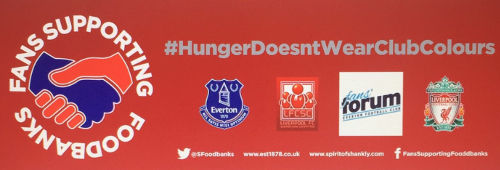
A new NYC franchise can work in tandem with them to provide great community impact to the local area, by doing more pressing things on the Maslow Hierarchy of needs such as community support. Sometimes in sport we don’t need to compete. As shown below by Premier League city rivals Liverpool and Everton's joint initiative to combat people deprived of food in the city of Liverpool.
Our story, is simply working together as football clubs to make the world a better place.
Brand voice
If you look at any brand voice chart, there are many brand voices. Below are the 4 unique brand voices, from Passionate, Quirky, Irreverent to Authentic.

Brands like Burger King and Wendy’s for example, with their direct and sometimes indirect tweets about McDonald’s Ice Cream machine seemingly always being broken, are very quirky by nature. Designed to tap into meme culture and evoke humour. While pharmaceutical companies like Roche are authentic. They are honest and direct, and keep a serious tone to reflect the nature of what they are trying to do.


Wendy's with a quirky brand voice Pharmaceutical company Roche with an irreverent brand voice
Quirky in football
In football parlance, some teams brand voice have taken on a similar trajectory to Burger King and Wendy’s quirky style. Spartak Moscow being the biggest example

Spartak Moscow
European Football has become somewhat a top-down culture, of its own class of teams always making the latter stages of the UEFA Champions League. It’s usually a mixture of whenever Real Madrid, Barcelona, Manchester United, Liverpool, AC Milan and Bayern Munich go through their boom or bust cycles, alongside the ever-present rich clubs such as Chelsea and Manchester City. This leaves clubs with a great lineage and fanbase such as Ajax, Benfica, Celtic, languishing behind, due to their smaller domestic tv rights income. With these clubs with great lineages struggling to break through the glass ceiling of clubs above that, there is another tier below them. And that is clubs like Spartak Moscow, who usually don’t make it out of the group stages of the UEFA Champions League.
Because of the elite tier of footballing brands of Real Madrid, Barcelona, Liverpool, Bayern etc, and the tier below them of clubs such as FC Porto, Borussia Dortmund, Sevilla, Feyenoord who like Ajax, Benfica and Celtic are storied clubs, but not with the sporting successes and brand recognition of the aforementioned - it is hard for clubs like Spartak Moscow to build a brand in such a layered and crowded football space. It is essentially two glass ceilings. However, social media and having a quirky brand voice has allowed clubs like Spartak Moscow to build their own brand and following, simply by tapping into meme culture.
As you can you see in the tweets below, Spartak Moscow are able to take advantage of topical conversations, and increase their presence. Their TikTok account has over 96 million likes, more than Premier League side and previous Champions League finalists Arsenal with 15.9 million.
Here are a few examples of Spartak Moscow tapping into topical discussions on the internet, as well as embracing quirkiness to build engagement and brand recognition online. This strategy to grow their brand, offsets the brand recognition that would come with global sporting success.

On October 4th 2021, Facebook and all it's subsidiaries Instagram, Whatsapp and much more were down. Spartak Moscow took this as an opportunity to poke fun at Barcelona, who were struggling at the time. This engaged a lot of people, considering the self-deprecating nature of a club the size of Spartak making fun of Barcelona.

Below is a doctored message of Spartak Moscow sending a message to Lionel Messi's official Instagram account, during the summer of 2021 when he was a free agent. The tongue in cheek, self-deprecating nature of Spartak Moscow punching above their weight in the glass ceiling structure of European Football, is a great way of engagement.

As you can see in the Google chart below, throughout Messi's illustrious career, Google trends for Messi reached it's highest ever during July - September 2021, when the rumour mill was rife about where he would play next, all the way through September, despite his debut for PSG in late August, due to initial curiosity of how he would fare in France. Spartak chose to put out this tweet in January of 2021, one day after he became eligible to negotiate with clubs to sign in the aforementioned summer. The tweet went viral, with over 80,000 likes and 15,000 retweets in a few hours. A masterstroke in quirky brand voice strategy.

Passionate in football
They say your brand is what people say about you when you are not in the room. Marcus Rashford MBE has never focused too much on metrics and strategies to build a brand, but simply built it out of the goodness of own his heart. With his open-letter to the Prime Minister in January 2021 about free school meals.
But as with anyone and anything, what you do becomes your brand. And as seen below, Marcus’s brand voice is not quirky like Spartak Moscow, it is of a serious and informative nature, yet passionate about a cause. Whereas, Spartak Moscow’s brand recognition may not be serial European Cup winners, it’s quirky brand of being topical and engaging has definitely put themselves in the spotlight. Yet Marcus Rashford’s voice is not about putting the spotlight on himself, it is about bringing a spotlight to important causes affecting others, bigger than football.


Irreverent in football

As you can see in FIFA’s tweet, they are also passionate like Marcus Rashford about important causes. However, their tweets stay to an irreverent and serious tone at all times, to reflect its footballing governance nature. As a governing body nearly 120 years old, there isn’t a need on their part to be quirky, or even being overly passionate to bring attention their brand.
“For the game, for the world”, the motto of FIFA clearly shows that as an established sporting governmental body, their job is to preserve and develop the game in the present and beyond. Something of such a sheer global scope requires an irreverent brand voice.
Authentic in football
As discussed with the two glass ceilings in football, for a club with the tv revenue of Spartak Moscow, it is hard for clubs of that size to be authentic, without being lost in the crowded football space. This is also the case for football media. Many leading news outlets produce great footballing content, but find it hard to break through, and create the revenue and gain as much coverage as their counterparts. Sometimes, this is exposed in the most obscure of ways. In February 2017, as Arsenal lost 3-1 to Chelsea, Gary Neville lambasted successful YouTube channel AFTV for their presence outside the ground. As host Robbie Lyle later pointed out in a sit-down interview with Neville, Chelsea supporters themselves had an independent YouTube channel outside the ground too, that nobody in the media even knew was there. Yet, it’s only the more popular outlets that gain recognition, but also on the adverse in this case - the scrutiny.
COPA90 is a football brand that has been able to break that mould of being lost in the shuffle by producing authentic content, with YouTube videos about authentic footballing topics, such as their YouTube series COPA90 Stories. Their brand voice here is unique, because it’s not mainly their tone of voice that sets them apart, but it’s how they use that voice to talk about unique topics. Such as their YouTube series about Columbus Crew fans, trying to stop their proposed relocation to Austin Texas. Having unique content, while transiently shifting your brand voice from quirky, irreverent, passionate and authentic – ultimately bestows them into the authentic category and deservedly so.

Where would a new NYC franchise rank on a brand voice chart?
Passionate is where a new NYC franchise would rank. Every piece of content, whether it’s match results, every press conference, every video of a training session, to even fan experience videos all tie into an arc. An arc of being a team that is for the people, and reclaiming New York. This is immediately by virtue a team built on passion. Success on the pitch is the ultimate goal, but when times are tough, or during the off-season when not a lot is going on – the content and message packaged in a passionate brand voice reminds fans -
A) Why they are here
B) How far they have come, from not having their own franchise.
A passionate brand voice is the glue that sticks the arc and backstory of a new NYC Team together.
Verbiage and key terms
Apple are renowned for using words “You” and “Your”. According to Inc, this is to make the products more about the customer than Apple themselves. How YOUR problems will be solved by a better camera, how YOU will feel having a status symbol of the latest iPhone.
A new NYC franchise verbiage would predicate around terms such as
· Reclaim
· For the people
· New York’s team
· Local pride
· Community
· Footballing soul
Brand identity vs Brand Image
To the rest of the MLS, in a closed shop league where at least one new team has joined since 2017, there are plenty of cities vying for a spot. With a new global TV rights deal securing $2.5 billion from Apple, there’s no wonder why cities like Las Vegas are being lined up to join, with St Louis already confirmed for 2023. The brand identity of a new NYC team to others will be seen as yet ANOTHER team from the Big Apple, taking coveted spots to gain money from…well Apple. The tri-state area with its trifecta of teams taking away 10% of the eventual 30 spots in the league.
Although localised pride may be the narrative in New York, to the rest of the league – all three may as well be one team taking up three spaces. Apple’s deal like Sky’s for the foundation of the Premier League in 1992, will see a lot of cities wanting a slice of the pie. And with 10% of those plates serving the pie to the city of New York, the brand image of a new NYC team could be damaged before it already begins. This is where the brand story MUST be told very well through social media channels. Especially on TikTok or YouTube Shorts, where a simple elevator summary of why this new team is here, and why they are different to the other two can be told in a brief snapshot. This short, concise, sharable media can simply spread the "why" of this team very quickly and simply. Through this brand storytelling, is where the brand identity is built.
Imagery and landmarks
If you were to place the NY Red Bulls logo and the New York City logo side by side, you would be hard pressed to see anything resembling New York. When you look at the Liverpool and PSG logo, you can see the Liverbird and the Eiffel Tower respectively being the fulcrum of their badge. Their Coat of Arms, if you will. You clearly see the visual identity of the city, is emblazoned in their global brand.
Is there anything that says brand before city than the NYC FC and NY Red Bull logos? A new NYC team should embrace the Golden State Warriors, Liverpool FC, PSG in having localised imagery in their logo. Whether it’s the statue of liberty or even a classic NYC taxi (okay maybe not that).
Name and colour
The San Francisco 49ers not breaking their 20 year Superbowl drought at Superbowl 49, has a NFL Films producer somewhere wallowing at a missed opportunity. But why are they called the 49ers? Because of the people that flocked to the Bay Area in 1849 during the Gold Rush in search for gold. A name with a call-back and representation of it’s city's historical past and lineage. The Boston Celtics, are said to be named due to the strong Irish population in Boston, as well as a tribute to the Original Celtics, a Basketball team, ironically from New York.
So what names could they be called?
New York Broadway? Incorporating local landmarks
New York Liberty? Again incorporating local landmarks, but liberty having another meaning in reclaiming the city's soccer soul.
The state motto of NYC is Excelsior, the continuous search for excellence - New York Excelsior's?
For a city that brands itself on saying it never sleeps, how about the New York Nocturnals?
A simple New York United will also suffice. But the United name is mainly for teams from the same city who unite as one. An example being, Newcastle United were formed after the merger of Newcastle West End (formerly known as Tyne Association when founded in 1877) and Newcastle East End, who were founded in 1882. Both went on to merge in 1892 and form Newcastle United.
Though the narrative and backstory behind a new NYC team forming, can create a new meaning to the word united. Remember in DW Kickoff's video about how a divide still exists between fans that supported the MetroStars and not supporting the rebranded Red Bulls, vs the fans that did. New York being UNITED is the perfect meaning for bringing both sides together again.
A United and City rivalry going from Manchester to now New York could now emerge, with a Red Bull X-factor raging it's horn at both.
Team colour
When Los Angeles FC was formed, they wanted to be the antithesis of the glitz and glamour of city rivals LA Galaxy. So, their black shirt’s dark tones represent the grit of the LA people, compared to the shiny bright Hollywood feel colours of LA Galaxy.
This WE ARE LAFC video, is exactly the sort of video that would need to be a pinned post on all social media platforms of a new NYC franchise. It is the tribal call of LA, it articulates the backstory of who they are, the reasoning behind their logo design, and why they are unique. But notice there is a Grayscale effect throughout the video. This colour effect background articulates their brand throughout the video - regardless of what images or dialogue is showing at any point in time. The message is portrayed consciously by imagery and dialogue, but the Grayscale articulates the teams gritty persona subconsciously.
NY Red Bulls and New York City play in white and red respectively. A new NYC team taking a leaf out of Los Angeles FC playbook and playing in black to represent the urban heart of the Big Apple would also be a good colour. Or they could even use the colours of the old NY MetroStars of red and black.
Inter Miami embrace the colour pink as their home shirt and overall branding, due to the pink Miami sky at dawn and dusk. If for example, the new NYC franchise played into “the city that never sleeps” mantra, then a dark blue/black colour representing the night sky would fit that.

Inter Miami also are nicknamed “The Herons” due to the many herons in Miami. A Beaver being incorporated into the badge could be an idea, seeing as it is the official state animal of New York. Perhaps a brown shirt representing a Beaver could work too. Beaver Street is also one of the most prominent cities in the NYC Financial District, with many buildings hosting the brown colour of their animals namesake. A brown shirt representing that landmark, with a Dupont Yellow trim of the NYC taxi going across the shirt, associated logos and imagery too - could definitely hit home.

Brand Equity - The commercial paradox
So, we get it. A new NYC teams’ story is being an antithesis to “the other two” NYC teams. Not being a front for commercialisation. Not being a feeder club, in a long line of other feeder clubs.
But isn’t creating a BRAND strategy to combat them doing exactly the same thing? Having read everything, about how a new NYC team would be the antithesis to “the other two” New York teams, a front for commercialisation, isn’t thinking of a BRAND strategy, doing exactly that?
Not exactly. The Kevin Keller’s Customer-based Brand Equity model has been a staple on building brand equity for decades. Keller has broken it down into three major categories of Attributes, Benefits, and Attitudes. As long as those three categories speak to something that people can TRULY BELIEVE in, and RESONATE with, it will be seen as branding on behalf of the PEOPLE and NOT a commercial tool.

Let’s unpack those three categories.
Attributes
A study published in 2015 from Spanish Newspaper Sport, showed that City Football Group’s main club Manchester City had grown their fanbase by 523%. This was coming 3 years after they had won their first Premier League title in 2012. In that same time, Manchester United who at their height were the biggest supported club in England, were down 19%. This shows the best PR in football is success on the pitch. Manchester United were seen as the “glory hunter’s” choice during the 90s and 2000s. Something Manchester City have become recently. However, according to a study by Deloitte, only 1% of City’s fanbase are based in the UK, despite having over 90M followers across all their social media accounts.
So would success on the pitch for a new NYC team matter, if the MLS doesn’t have the global following the Premier League does?
It would most likely have the same effect on a micro-scale. Remember how we talked about the team focusing on local pride? A new fan wanting to support their local MLS team 10 plus years after its launch, could look at which team is the most successful. They may disregard the commercial front for Red Bull and Manchester City, as well as the Sportswashing conundrum, and happily embrace the more successful team. Would a new generation of children who were born after the MetroStars rebranded to Red Bulls, or born after the cult hero days of Eyal Berkovic and Danny Tiatto were wearing Sky Blue of Man City in mid-table, take to the story and narrative about a new team focused on local pride? It could depend on millennial parents who witnessed the MetroStars rebrand having children, and educating them on the death of the MetroStars. Although, the fertility rate in NYC in 2020 decreased 5.8% since 2010.
The attributes of the brand equity, could come down to the proportion of NY residents valuing success, vs the value of feeling a local connection with a team.
Benefits
A lot of MLS fans have a local team, while supporting a big European team. They may be comfortable supporting either Red Bulls or New York City instead of a team that feels in touch with their city, as they already support a team that isn’t connected to them thousands of miles away anyway. On the other hand, if you support a serial winner in Europe such as Real Madrid, and get your success through that, it’s reasonable to think future fans may buy-in to the local pride narrative of a new NYC team and support them, as they wouldn’t need to get their success fix from the MLS. The benefit could vary person to person on whether they solely support an MLS team, or get their success from a big European team. Therefore, they won’t feel the need to follow a more successful NYC team in New York City or NY Red Bulls, and instead buy into the new NYC team’s local narrative.
Attitude
The attitude of a new NYC team must stay consistent with its narrative the more successful it becomes. Football (particularly in England) has long been bemoaned for losing touch with its working-class roots. The brand equity of a new NYC team must have a consistent thread of its narrative and backstory as it evolves. Otherwise, this narrative would risk being seen as a “starter wife”, a gimmick if you will, to gain fan support. Thus leading to an exodus of fans, who feel their local pride is used as bait bring them in.
One of the best TED Talks of all time is “Start with why – how great leaders inspire action” by Simon Sinek. It has nearly 10 million views, and is shown in universities all over the world. Even at my own alma mater, on the first lecture of an entrepreneur module of our assignment, we were shown it. One of the standout quotes was “People don’t buy what you do, but why you do it”. And the attitude section of the Keller Brand Equity model in this case is, start but also CONTINUE with why. Remembering why you started, and continuing with it.
It’s very clear to see what Red Bull and the City Football Group’s why is. Just an opposing why, is what will set this new franchise apart attitude wise, but they MUST stick to it. That's where true connection and trust it - not just in sport, but in life.
Conclusion, Likelihood, Logistics
It’s clear there is a gap missing for a team in NYC that isn’t an MCO. But the likelihood depends on if the gap is noticeable enough for anyone to do something about that. With the successes of both New York City and New York Red Bulls, fans may naturally flock to them. But those who followed the MetroStars will always have a say.
As widely reported, there are mixed feelings about a new stadium for NYC FC, who currently play at Yankee Stadium. Residents want NYC FC to pay $100 million in property taxes, as well as a program offering a reduced-price stock offering to residents. Some feel there are better uses for land and resources in the local area than another stadium too. While mayor Eric Adams is alleged to getting it done, and possibly built by 2025. The fact a successful enterprise in NYC FC is struggling to find a stadium raises concern for a new NYC franchise logistically. As well as the many other sporting franchises and sporting venues in the tri-state area. Not only is that a crowded sporting space, as discussed earlier so is the MLS itself. But it all comes down to your why. The why of every MetroStars fan who feels they have no soccer identity. The why of fans choosing established disregarding commercialisation, and choosing sporting success vs local pride. The patience of a new NYC franchise fanbase, in it’s growing pain stages. And of course, the why of the wider United States soccer community, embracing a third New York soccer franchise.
All in all, this franchise would be a refreshing injection to New York. The proposed revamped European Super League without permanent membership, has been seen as a great sporting alternative to the Champions League, of state-backed heavy clubs. But in the battle of a cities local civic pride vs commercialism, what better place to host that battle than in New York.


Comments